Climate change stands as one of humanity’s most pressing challenges, demanding innovative solutions and predictive capabilities. Advanced modeling and simulation techniques have emerged as powerful tools in our quest to understand and anticipate environmental transformations.

Scientists and researchers worldwide are harnessing cutting-edge computational methods to decode complex climate patterns and forecast future scenarios. These sophisticated approaches combine vast datasets, powerful algorithms, and supercomputing capabilities to paint increasingly accurate pictures of our planet’s climatic future, enabling policymakers and communities to prepare for what lies ahead.
🌍 The Evolution of Climate Modeling Technology
Climate modeling has undergone remarkable transformation since its inception in the mid-twentieth century. Early climate models were relatively simple mathematical representations of atmospheric processes, constrained by limited computational power and incomplete understanding of Earth’s systems. Today’s models represent quantum leaps in complexity and accuracy.
Modern climate simulations incorporate multiple interconnected components including atmospheric circulation, ocean dynamics, ice sheet behavior, vegetation patterns, and biogeochemical cycles. These Earth System Models (ESMs) can simulate interactions between different planetary systems with unprecedented detail, revealing feedback loops and cascading effects that earlier generations of models couldn’t capture.
The computational infrastructure supporting contemporary climate science includes some of the world’s most powerful supercomputers. These machines process petabytes of data, running simulations that can take months to complete even with their immense processing capabilities. This technological advancement has enabled researchers to increase model resolution dramatically, moving from grid cells hundreds of kilometers across to those measuring just a few kilometers.
Understanding the Architecture of Climate Models
Climate models function as virtual laboratories where scientists can test hypotheses about Earth’s climate system. At their core, these models solve fundamental physical equations governing fluid dynamics, thermodynamics, and radiative transfer. The atmosphere and oceans are divided into three-dimensional grids, with each grid cell containing calculations for temperature, pressure, humidity, wind velocity, and other variables.
The architecture typically includes several interconnected modules:
- Atmospheric component: Simulates air movement, cloud formation, precipitation, and energy transfer
- Oceanic component: Models water circulation, temperature distribution, and salinity variations
- Land surface component: Represents vegetation, soil moisture, snow cover, and permafrost dynamics
- Sea ice component: Tracks ice formation, movement, and melting in polar regions
- Biogeochemical component: Simulates carbon, nitrogen, and other element cycles
These components exchange information at regular intervals, creating a coupled system that mirrors the interconnected nature of Earth’s actual climate. The challenge lies in accurately representing processes that occur at scales smaller than the model’s grid resolution, requiring sophisticated parameterization techniques.
🔬 Advanced Simulation Techniques Reshaping Climate Science
Machine learning and artificial intelligence have revolutionized climate modeling in recent years. Neural networks can identify patterns in climate data that traditional statistical methods might miss, improving the representation of complex processes like cloud formation and turbulence. These AI-enhanced models can run hundreds of times faster than traditional physics-based simulations while maintaining comparable accuracy.
Ensemble modeling represents another breakthrough approach. Rather than relying on a single simulation, scientists run multiple models with slightly different initial conditions or parameter settings. This ensemble approach provides probability distributions for future outcomes rather than single point predictions, offering policymakers a more nuanced understanding of uncertainty and risk.
High-resolution regional climate models allow for detailed predictions at local scales. While global models provide the big picture, regional models can zoom in on specific areas, capturing topographical influences like mountains and coastlines that dramatically affect local climate. These models prove invaluable for urban planning, agricultural adaptation, and infrastructure resilience strategies.
Data Assimilation: Bridging Observations and Predictions
The accuracy of climate predictions depends critically on the quality of input data. Data assimilation techniques integrate observations from satellites, weather stations, ocean buoys, and aircraft into model simulations, continuously refining predictions as new information becomes available. This process resembles how GPS navigation systems update routes based on real-time traffic data.
Satellite observations have become indispensable for global climate monitoring. Remote sensing instruments measure everything from sea surface temperatures and ice extent to atmospheric composition and vegetation health. These measurements provide the observational constraints that keep models grounded in reality and help validate their predictions.
Paleoclimate data from ice cores, tree rings, and sediment layers extend our observational record back thousands or even millions of years. This deep-time perspective helps calibrate models against past climate variations, testing whether they can accurately reproduce historical climate changes before applying them to future predictions.
⚡ Computational Challenges and Breakthrough Solutions
Climate modeling pushes the boundaries of computational science. A single high-resolution simulation can require millions of processor hours and generate petabytes of output data. Managing these computational demands requires innovative approaches to parallel processing, data storage, and algorithm optimization.
Cloud computing platforms are increasingly being leveraged for climate research, providing scalable resources that can expand and contract based on project needs. This democratizes access to powerful computing capabilities, enabling smaller research institutions and developing nations to participate more fully in climate science.
Quantum computing holds promise for future breakthroughs in climate modeling. While still in early stages, quantum algorithms could potentially solve certain types of climate equations exponentially faster than classical computers, enabling simulations of unprecedented complexity and resolution.
Uncertainty Quantification and Risk Assessment
Understanding and communicating uncertainty represents a critical aspect of climate prediction. Models inevitably contain uncertainties stemming from incomplete physical understanding, computational limitations, and unpredictable human behavior affecting future greenhouse gas emissions. Sophisticated statistical techniques help quantify these uncertainties and translate them into actionable risk assessments.
Scenario-based modeling explores different possible futures based on varying assumptions about population growth, technological development, policy decisions, and economic trends. The Intergovernmental Panel on Climate Change (IPCC) uses Shared Socioeconomic Pathways (SSPs) that span a range from aggressive emissions reductions to continued high emissions, providing a framework for understanding how human choices influence climate outcomes.
Probabilistic forecasting moves beyond single predictions to provide likelihood ranges for different outcomes. Rather than stating that temperatures will rise by exactly 2.5 degrees, models might indicate a 66% probability of warming between 2 and 3 degrees under specific emission scenarios, giving decision-makers better tools for risk management.
🌊 Modeling Tipping Points and Extreme Events
Climate tipping points represent threshold conditions beyond which systems undergo rapid, potentially irreversible changes. Advanced models increasingly focus on identifying and predicting these critical transitions, from ice sheet collapse and Amazon rainforest dieback to ocean circulation shifts and permafrost thaw.
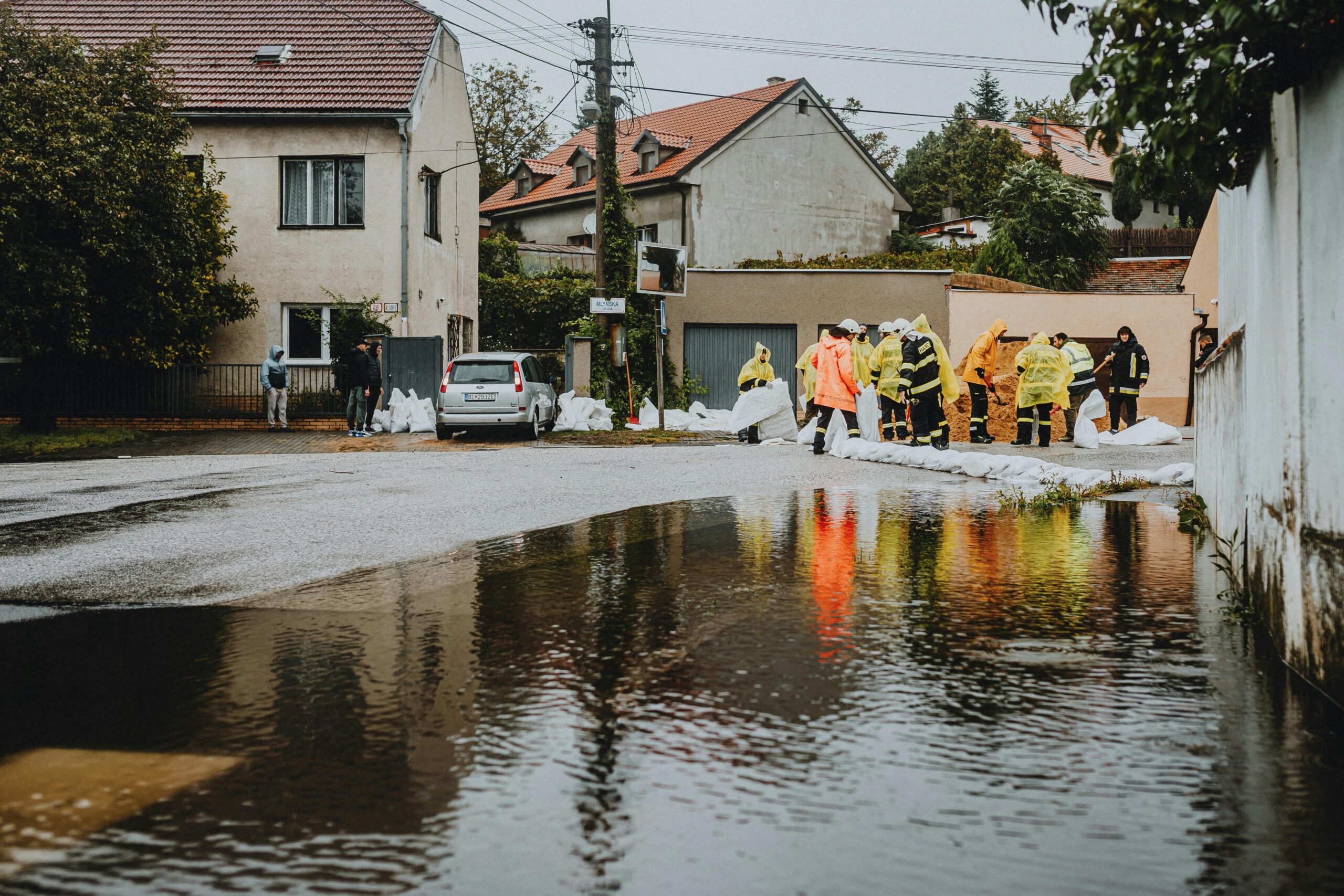
Extreme weather events like hurricanes, heatwaves, droughts, and floods pose immediate threats to human communities. High-resolution models can now simulate these events with remarkable fidelity, helping communities understand how climate change might affect the frequency and intensity of extreme weather in their regions.
Compound events, where multiple hazards occur simultaneously or in sequence, represent a frontier in climate risk modeling. For example, drought conditions followed by intense rainfall can trigger devastating floods and landslides. Models that capture these complex event chains provide more realistic assessments of climate-related risks.
Regional and Local Climate Projections
While global climate patterns follow broad trends, local impacts vary dramatically based on geography, topography, and ecosystem characteristics. Downscaling techniques translate global model outputs into regional and local projections, providing the granular information needed for adaptation planning.
Statistical downscaling uses historical relationships between large-scale climate patterns and local conditions to refine predictions. Dynamical downscaling employs high-resolution regional models nested within global models, capturing local features like mountain ranges, coastlines, and urban heat islands with greater precision.
Urban climate modeling has gained importance as cities concentrate more than half the world’s population. These specialized models account for unique urban features like buildings, roads, and heat-generating infrastructure, helping city planners design more resilient and sustainable urban environments.
🎯 Applications in Policy and Decision-Making
Climate model outputs inform international agreements, national policies, and local adaptation strategies. The Paris Agreement’s goal of limiting warming to well below 2 degrees Celsius relies heavily on model projections showing the consequences of different emission pathways and the feasibility of various mitigation strategies.
Economic models integrated with climate projections help assess the costs and benefits of different policy approaches. These integrated assessment models combine climate science with economic theory to evaluate trade-offs between mitigation investments today and adaptation costs in the future.
Infrastructure planning increasingly incorporates climate projections. Engineers designing bridges, water systems, and power grids use model outputs to ensure structures can withstand future climate conditions, not just historical weather patterns. This forward-looking approach builds resilience into long-lived infrastructure investments.
Emerging Frontiers in Climate Prediction
Digital twin technology represents an exciting frontier where virtual replicas of Earth’s climate system run in real-time, continuously updated with observational data. These digital twins could provide early warning of developing climate anomalies and test intervention strategies before implementing them in the real world.
Coupled human-Earth system models aim to capture feedback loops between climate change and human responses. As climate changes, humans adapt through migration, technology adoption, and policy changes, which in turn affect emissions and land use patterns. Modeling these coupled dynamics provides more realistic long-term projections.
Climate intervention modeling explores the potential impacts and risks of proposed geoengineering approaches like solar radiation management or carbon dioxide removal. These controversial techniques require careful simulation to understand unintended consequences before any real-world deployment.
🚀 The Role of International Collaboration
Climate modeling thrives on international cooperation. The Coupled Model Intercomparison Project (CMIP) coordinates climate modeling efforts worldwide, establishing common protocols and scenarios that enable researchers to compare results across different models and identify robust predictions versus areas of uncertainty.
Data sharing initiatives ensure that observations and model outputs reach researchers globally. Open-access policies and standardized data formats facilitate collaboration and accelerate scientific progress, recognizing that climate change represents a global challenge requiring collective action.
Capacity building programs help train the next generation of climate modelers, particularly in developing nations that face significant climate risks but have limited research infrastructure. These programs transfer knowledge and technology, ensuring diverse perspectives contribute to climate science.
Communicating Climate Predictions Effectively
Translating complex model outputs into actionable information for policymakers and the public represents a persistent challenge. Visualization techniques transform abstract data into intuitive graphics, maps, and animations that make climate projections more accessible and understandable.
Interactive tools allow stakeholders to explore different scenarios and understand trade-offs. Web-based platforms enable users to adjust emission assumptions or adaptation strategies and see projected outcomes, fostering engagement and informed decision-making.
Storytelling approaches that connect climate data to human experiences help bridge the gap between scientific abstraction and personal relevance. Narratives about how climate change might affect local agriculture, water supplies, or coastal communities make distant projections feel immediate and important.

🔮 Looking Toward Tomorrow’s Predictions
The future of climate modeling promises even greater accuracy and utility. Next-generation models will achieve kilometer-scale global resolution, capturing small-scale processes that current models must approximate. This increased fidelity will improve predictions of regional climate patterns and extreme events.
Artificial intelligence will continue revolutionizing climate science, not just accelerating simulations but discovering new relationships in climate data and suggesting innovative modeling approaches. Hybrid models combining physics-based equations with machine learning algorithms may offer the best of both worlds.
Real-time climate prediction services could emerge, analogous to weather forecasting but focused on seasonal to decadal timescales. These services would help sectors like agriculture, energy, and water management optimize decisions based on near-term climate outlooks.
As modeling capabilities advance, the imperative to act on climate projections grows more urgent. Models consistently show that early, aggressive emissions reductions offer the best path to avoiding the most severe climate impacts. The tools for predicting our climate future have never been more powerful; the challenge now lies in using those predictions to chart a sustainable course forward.
Mastering climate prediction through advanced modeling and simulation represents humanity’s effort to see around corners, anticipating challenges before they become crises. These sophisticated tools don’t just forecast inevitable futures but illuminate the consequences of our choices, empowering us to shape a more livable world. As computational power grows and scientific understanding deepens, our ability to navigate the climate challenges ahead continues to strengthen, offering hope that informed action can steer us toward a sustainable future.