Climate change and rapid urbanization are reshaping our cities in unprecedented ways. As temperatures rise, extreme weather events intensify, and air quality deteriorates, the need for intelligent urban design has never been more critical for human survival and wellbeing.

Modern cities face a triple threat: dangerous heat waves that claim thousands of lives annually, devastating floods that destroy infrastructure and homes, and poor air circulation that traps pollution at ground level. These challenges aren’t isolated problems—they’re interconnected crises that demand holistic, forward-thinking solutions. Urban planners, architects, and policymakers are now racing against time to reimagine our concrete jungles as livable, resilient environments that protect residents while enhancing quality of life.
🌡️ The Urban Heat Island Effect: Why Cities Are Getting Dangerously Hot
Cities typically experience temperatures 5-7 degrees Fahrenheit higher than surrounding rural areas, a phenomenon known as the urban heat island effect. This temperature difference occurs because traditional building materials like concrete and asphalt absorb and retain heat throughout the day, releasing it slowly at night. The lack of vegetation, dense construction, and waste heat from vehicles and air conditioning systems further compound the problem.
During summer months, this heat intensification creates life-threatening conditions, particularly for vulnerable populations including the elderly, children, outdoor workers, and low-income communities who often lack access to adequate cooling. Heat-related deaths have increased by 56% globally over the past two decades, with urban areas experiencing the most severe impacts.
The economic costs are staggering as well. Excessive heat reduces worker productivity, strains electrical grids, increases energy consumption for cooling, and damages infrastructure. Cities that fail to address heat challenges face billions in economic losses alongside mounting public health crises.
Innovative Cooling Strategies Transforming Urban Landscapes
Progressive cities worldwide are implementing creative solutions to combat extreme heat. These strategies combine traditional wisdom with cutting-edge technology to create cooler, more comfortable urban environments.
Green Infrastructure: Nature’s Air Conditioning System 🌳
Urban forests and strategic tree planting represent one of the most effective heat mitigation strategies. Trees provide shade that can reduce surface temperatures by up to 45 degrees Fahrenheit and cool the air through evapotranspiration. Cities like Singapore have pioneered “vertical greening” policies that require new buildings to replace lost greenery through rooftop gardens, vertical gardens, and sky terraces.
Green roofs and living walls serve multiple functions beyond cooling. They absorb rainwater, reduce stormwater runoff, improve air quality, provide habitat for urban wildlife, and create peaceful green spaces for residents. Chicago’s green roof initiative has installed over 500 green roofs covering more than 5 million square feet, reducing building energy use by 10-15% annually.
Cool Pavements and Reflective Surfaces
Traditional dark asphalt absorbs up to 95% of solar radiation, becoming hot enough to cook eggs during summer. Cool pavement technologies use lighter-colored materials, reflective coatings, or permeable surfaces that reflect solar heat and allow water infiltration. Los Angeles has painted select streets with specialized cool pavement coating, reducing surface temperatures by 10-15 degrees on treated roads.
Reflective roofing materials make significant differences for individual buildings and neighborhoods. White or light-colored roofs can reduce roof surface temperatures by 50-60 degrees compared to dark roofs, cutting air conditioning costs by 10-30% while reducing urban heat island effects.
Water Features as Urban Climate Moderators 💧
Fountains, ponds, misting stations, and water walls provide evaporative cooling that can reduce local temperatures by several degrees. Cities like Paris have installed public misting stations and temporary fountains throughout the city during heat waves, providing immediate relief to residents without access to air conditioning.
Seoul’s Cheonggyecheon Stream restoration project removed an elevated highway and restored a historic stream through downtown, creating a cooling corridor that reduced nearby temperatures by 5.9 degrees Fahrenheit while increasing biodiversity and providing recreational space for millions of visitors annually.
🌊 Flood-Resilient Urban Design: Working With Water, Not Against It
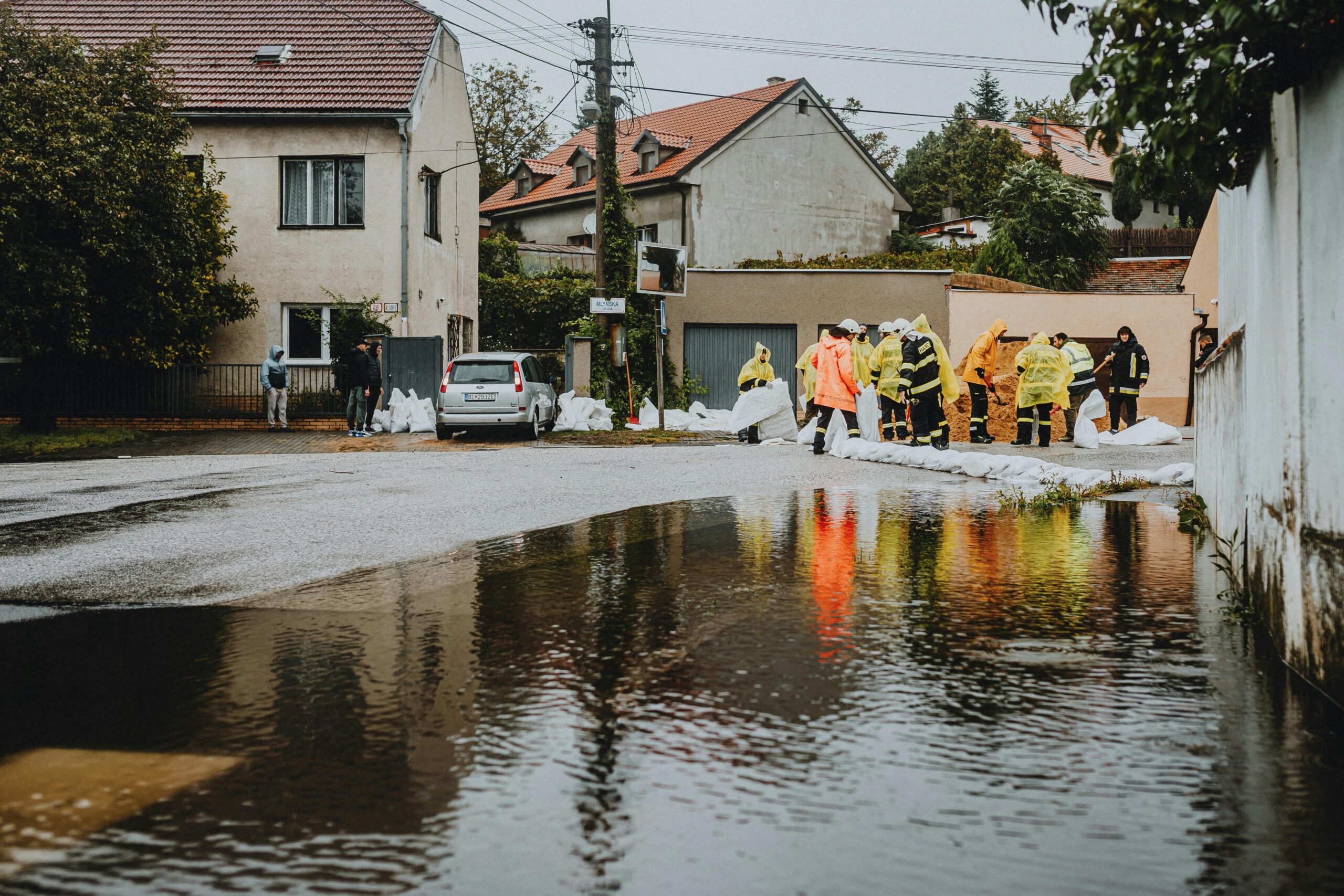
Climate change has intensified rainfall patterns, with many cities experiencing more frequent and severe flooding events. Traditional infrastructure approaches that channel water away as quickly as possible through pipes and drains are proving inadequate and environmentally damaging.
Modern flood protection strategies embrace water as a design element rather than treating it as a problem to be eliminated. These approaches reduce flood damage while creating multiple co-benefits for communities.
Sponge Cities: Absorbing Water Like Nature Intended
China’s sponge city initiative aims to retrofit urban areas to absorb and reuse 70% of rainwater through permeable surfaces, rain gardens, constructed wetlands, and green spaces. Cities like Shanghai and Wuhan are investing billions to transform impermeable concrete landscapes into absorbent ecosystems that naturally manage stormwater.
These systems work by allowing water to infiltrate where it falls rather than overwhelming drainage systems during heavy rains. Permeable pavements, bioswales, rain gardens, and detention basins slow water movement, filter pollutants, recharge groundwater, and reduce downstream flooding.
Room for the River: Giving Water Space to Flow
The Netherlands’ “Room for the River” program represents a paradigm shift in flood management. Rather than building ever-higher levees, the program creates overflow areas, lowers floodplains, and moves levees further from rivers to give water space during floods. This approach has reduced flood risks while creating valuable wetland habitats and recreational areas.
Similarly, New York City’s post-Hurricane Sandy resilience strategies include constructed wetlands, living shorelines, and flood-absorbing parks that protect inland areas during storm surges while providing year-round community amenities.
Floating and Amphibious Architecture 🏘️
In flood-prone areas, some architects are designing buildings that coexist with water rather than fighting it. Amsterdam’s floating neighborhoods feature homes built on floating foundations that rise and fall with water levels. Meanwhile, amphibious houses in flood-prone regions rest on the ground during dry periods but float upward on vertical posts when waters rise.
These innovative approaches allow development in flood-vulnerable areas without increasing risk or requiring expensive flood barriers that can fail catastrophically.
Designing for Fresh Air Flow and Improved Urban Ventilation
Air pollution kills an estimated 7 million people annually worldwide, with urban areas experiencing the highest concentrations of harmful pollutants. Beyond reducing emissions at the source, cities can improve air quality through strategic urban design that promotes natural ventilation and pollution dispersion.
Wind Corridors: Creating Natural Ventilation Pathways 🌬️
Cities like Stuttgart, Germany, use topographic analyses and computer modeling to identify natural wind patterns and preserve ventilation corridors that bring fresh air from surrounding forests and hills into dense urban areas. Development regulations protect these corridors from construction that would block airflow.
Building orientation, height variations, and strategic placement create venturi effects that accelerate wind movement through urban canyons, flushing out pollutants and reducing heat accumulation. Hong Kong’s Air Ventilation Assessment system evaluates proposed developments for their impact on urban ventilation, rejecting projects that would impair air circulation.
Street Canyon Design and Building Configurations
Traditional grid patterns with uniform building heights can trap pollution at street level, creating unhealthy breathing zones. Varied building heights, strategic gaps between structures, and angled building facades improve air mixing and pollution dispersion.
The “lift-up” design approach, common in tropical cities, elevates buildings on columns to allow wind to flow through ground levels, cooling outdoor spaces while improving ventilation. Singapore mandates minimum ground-level porosity for new developments to maintain wind flow.
Urban Forests as Air Purification Systems
Beyond their cooling benefits, trees and vegetation act as natural air filters, capturing particulate matter on leaves and absorbing gaseous pollutants through stomata. Strategic tree placement along roads can reduce nearby particulate matter concentrations by 25-60%, though careful species selection is essential to avoid pollen-related issues.
Green buffers between highways and residential areas, vertical forests on building facades, and pocket parks throughout cities create distributed air purification infrastructure that operates continuously without energy inputs.
🏙️ Integrated Urban Planning: Connecting the Dots
The most effective urban climate adaptation strategies address heat, flooding, and air quality simultaneously through integrated design approaches that maximize co-benefits.
Complete Streets and Climate-Responsive Transportation
Streets occupy 25-30% of urban land area, making them critical opportunities for climate adaptation. Complete streets integrate shade trees, permeable surfaces, bioswales, cycling infrastructure, and pedestrian amenities that reduce heat, manage stormwater, improve air quality, and decrease automobile dependence.
Barcelona’s superblock program combines several blocks into car-free zones with extensive greenery, reducing traffic by 58% and nitrogen dioxide pollution by 25% while creating cooler, more livable neighborhoods.
Blue-Green Infrastructure Networks
Connecting green spaces through ecological corridors creates networks that amplify individual benefits. Continuous green infrastructure allows wildlife movement, enhances biodiversity, creates urban cooling corridors, and provides connected stormwater management systems.
Portland’s Green Streets program has transformed over 2,000 street blocks with bioswales and rain gardens that manage 1.2 billion gallons of stormwater annually while cooling the city and improving aesthetics.
Smart Technology Enabling Climate-Responsive Cities 📱
Digital technologies and real-time data collection enable cities to monitor conditions and respond dynamically to climate challenges. Sensor networks track temperature, air quality, flooding risks, and wind patterns, providing data that informs both immediate responses and long-term planning.
Barcelona’s Sentilo platform integrates thousands of sensors monitoring noise, air quality, temperature, and humidity, allowing officials to identify problem areas and deploy targeted interventions. During heat waves, the system identifies vulnerable neighborhoods for priority cooling center activation and wellness checks.
Mobile applications now provide residents with real-time information about local air quality, nearby cooling centers during heat emergencies, and flood warnings. These tools empower individuals to make informed decisions about outdoor activities and travel routes based on current environmental conditions.
Predictive Modeling and Climate Simulations
Advanced computer modeling allows planners to test design scenarios virtually before construction, evaluating how proposed developments will affect wind patterns, heat accumulation, and flood risks. These tools enable evidence-based decision-making and help avoid costly mistakes that could worsen climate vulnerabilities.
Digital twins—virtual replicas of cities that incorporate real-time data—allow continuous monitoring and scenario testing, helping officials optimize responses to changing conditions and plan future adaptations.
Community Engagement: Designing With People, Not Just For Them 🤝
Successful urban climate adaptation requires community participation to ensure solutions address real needs and gain public support. Residents possess invaluable local knowledge about problem areas, microclimates, and community priorities that technical experts might overlook.
Participatory design processes invite community members to contribute ideas, prioritize interventions, and help maintain implemented solutions. When residents participate in planting street trees, designing local parks, or selecting cooling strategies for their neighborhoods, they develop ownership and ensure long-term success.
Education programs help residents understand climate risks and adaptation strategies, building support for necessary changes. Community science initiatives engage residents in monitoring local temperatures, air quality, or flood-prone areas, generating valuable data while raising awareness.
Policy Frameworks Supporting Climate-Responsive Urban Design
Transforming cities requires supportive policies that incentivize or mandate climate-responsive design. Leading cities are implementing zoning codes, building standards, and development incentives that prioritize heat mitigation, flood resilience, and air quality.
Green area ratios require developments to include minimum amounts of vegetation, either at ground level or through green roofs and walls. Density bonuses reward developers who exceed environmental performance standards. Stormwater fees create financial incentives for on-site water management rather than overwhelming public drainage systems.
Climate adaptation planning must also address equity concerns, ensuring that vulnerable communities receive priority for interventions rather than being left behind. Heat mapping often reveals that low-income neighborhoods have fewer trees, less green space, and higher temperatures than affluent areas within the same city.
Looking Forward: The Future of Climate-Responsive Urbanism 🌍
Creating cooler, safer, smarter cities isn’t optional—it’s essential for human survival and wellbeing in an era of climate change. The solutions already exist, proven effective in cities worldwide. What’s needed now is political will, adequate funding, and commitment to implementing integrated approaches that address multiple challenges simultaneously.
The cities that thrive in coming decades will be those that act decisively today to transform urban environments. By embracing green infrastructure, working with natural water flows, designing for ventilation, and leveraging smart technology, we can create urban spaces that protect residents from climate extremes while enhancing quality of life.
This transformation represents not just a technical challenge but an opportunity to reimagine what cities can be—places where nature and built environment complement each other, where water is valued rather than feared, where fresh air flows freely, and where all residents can thrive regardless of income or neighborhood. The blueprint for these cities already exists; now comes the work of building them.